
Apigenin: why this flavonoid is getting attention in sleep and longevity science
Apigenin is getting attention for a reason. Not because it is new, and not because it promises a dramatic effect you can feel overnight. It is being discussed because it sits at the intersection of two biological conversations people care about right now: better sleep and better cellular aging support.
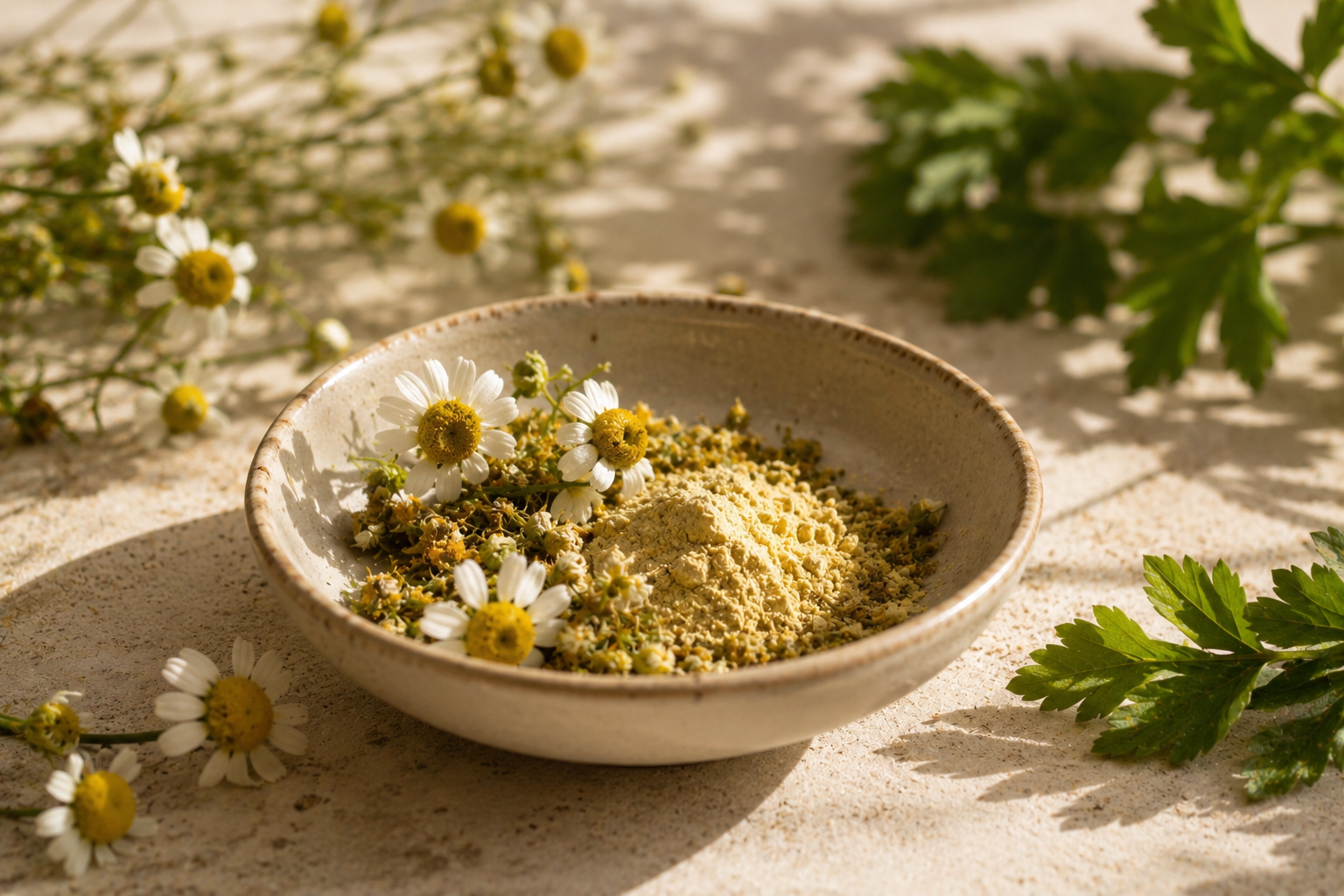
Apigenin is a flavonoid found naturally in plants such as chamomile, parsley, and celery. In the longevity space, its relevance comes from two main areas. First, it is being studied for its relationship with CD38, an enzyme linked to age-related NAD+ decline. Second, it is associated with calming, sleep-related biology through the same botanical context that made chamomile famous long before apigenin became a supplement ingredient.
That is what makes Apigenin more interesting than a generic “wellness” ingredient. It is not simply a botanical trend. It is a targeted compound with a clear scientific identity.
What makes Apigenin relevant to longevity science
One of the strongest reasons Apigenin appears so often in longevity discussions is its interaction with CD38.
CD38 is an enzyme that consumes NAD+, one of the key molecules involved in cellular energy production and repair. CD38 activity tends to increase with age, and that increase is considered one contributor to the steady decline in NAD+ seen over time. Preclinical research has shown that apigenin can inhibit CD38 and help preserve intracellular NAD+ in experimental settings. This does not yet mean that apigenin has been proven to restore NAD+ in humans as a clinical outcome, but it is one of the clearest mechanistic reasons the ingredient has earned serious attention.
That matters because the NAD+ conversation is no longer niche. It now sits near the center of longevity science. Any ingredient with a plausible connection to NAD+ preservation is naturally going to attract interest - especially when it also has relevance to stress regulation and sleep.
Why Apigenin is also associated with sleep
The second reason Apigenin matters is simpler and more familiar: it belongs to the same plant story as chamomile.
Chamomile has a long history of use in evening routines and relaxation, and human research on chamomile extract suggests modest but real effects on subjective sleep quality in some populations. A 2024 review concluded that chamomile may help with aspects of sleep, especially difficulty staying asleep, even if the evidence is not uniform across every sleep measure. Earlier placebo-controlled work in chronic insomnia also suggested mixed but relevant benefits.
This is where Apigenin becomes especially compelling. It gives a more precise name to one of the main bioactive compounds behind chamomile’s reputation. That does not mean isolated apigenin should be marketed as a sedative or as a treatment for insomnia. It means apigenin has a credible place in the conversation around evening calm, nervous system regulation, and the kind of sleep support people increasingly look for in non-pharmaceutical routines.
Sleep is not a side topic in healthy aging. It is one of the core conditions that influences recovery, resilience, and metabolic balance over time. Apigenin is interesting because it connects naturally to that foundation.
Beyond sleep: why precision matters
The strongest supplement ingredients are not always the loudest ones. Often, they are the ones with a clear role.
Apigenin is not best understood as a catch-all wellness compound. It is better understood as a focused flavonoid with a meaningful place in a modern longevity routine. Its value is not that it tries to do everything. Its value is that it speaks to two very specific priorities at once: supporting a more grounded evening physiology, and participating in the current scientific conversation around CD38 and NAD+ biology. That gives apigenin a very different profile from a generic antioxidant.
Conclusion
Apigenin is not interesting because it is fashionable. It is interesting because it is precise.
It belongs in the current longevity conversation because it speaks to two foundational ideas at once: the importance of sleep quality, and the importance of protecting the cellular systems that tend to decline with age. That does not make it a cure, and it does not need to. What it does make it is relevant - especially for people building a more thoughtful, ingredient-led approach to healthy aging.
That is where Apigenin fits best. Not as a miracle, and not as marketing noise. As a well-defined flavonoid with a real scientific reason to be here.
This product is a food supplement. It is not intended to diagnose, treat, cure, or prevent any disease. Food supplements should not be used as a substitute for a varied, balanced diet and a healthy lifestyle.
Scientific sources
Kramer DJ et al. (2024). Apigenin: a natural molecule at the intersection of sleep and longevity.
Escande C et al. (2013). Flavonoid apigenin is an inhibitor of the NAD+ase CD38: implications for cellular NAD+ metabolism.
Zick SM et al. (2011). A randomized placebo-controlled pilot study of chamomile for chronic primary insomnia.
Kazemi A et al. (2024). Effects of chamomile (Matricaria chamomilla L.) on sleep.


Leave a comment
This site is protected by hCaptcha and the hCaptcha Privacy Policy and Terms of Service apply.